Well Pump Repair in Cleveland, GA
Well pump repairs for Cleveland, GA homes include pump-depth and failed-component diagnosis; typical repairs run $300–$1,500, driven by pump depth and parts.
Heavy rain around Cleveland can saturate soil over buried water lines, so a sudden pressure change may warrant checking for a leak rather than assuming the fixtures are at fault. Our team tests before recommending a repair.
Near the White County Courthouse, older downtown storefronts and nearby homes can have different pipe layouts and access points, which affects how we locate a restriction. We check pressure and flow at more than one fixture, then explain what the readings show in plain language. Storm debris can also delay utility access or a repair visit; if access near your property is obstructed, tell us when scheduling so we can plan the work.
Cleveland’s frequent rain and thunderstorms can affect access and make outside line conditions worth checking. Our crew serves Cleveland, including properties around BabyLand General Hospital, and works on mountain homes on sloped lots as well as wood-frame houses and cabins.
Well pump repairs for Cleveland, GA homes include pump-depth and failed-component diagnosis; typical repairs run $300–$1,500, driven by pump depth and parts.
We install residential booster pumps sized to household demand, including pump capacity and electrical work; typical installation runs $800–$2,500.
We repair or replace home pressure regulators, including accessible valve assemblies; typical repairs run $250–$600 depending on valve condition and parts.
Low cold-water pressure service for homeowners includes checking cold-side valves and accessible piping. Typical repair costs depend on parts, pipe condition, and access.
Water Pressure Testing compares gauge readings and fixture flow for Cleveland, GA homeowners; a typical test is $75–$200, depending on access and fixture count.
We trace sudden home pressure loss, including meter and buried-line issues; access and excavation needs shape the repair scope and cost.
Whole-house pressure diagnosis for homeowners includes checking the main supply and accessible piping; repair scope and access shape the cost, with final quotes based on site conditions.
We diagnose weak showers for homeowners, including showerhead and supply-side restrictions; typical repairs run $150–$500, depending on access and parts.
We repair leaking residential water lines, including buried sections; typical jobs run $300–$2,000, depending on leak location and excavation access.
Clogged water line repair clears or corrects restricted residential piping, with the work scope and access affecting a typical $300–$1,500 job.
We diagnose weak kitchen and bathroom faucets, including accessible fixture connections. Typical repair runs $100–$350, depending on faucet condition and access.
We trace fluctuating home pressure through fixture and system checks; repair scope depends on the cause, access, and parts required.
We trace weak flow between the municipal meter and home, checking accessible service-line connections; saturated soil after rain can complicate access near Macon's Ocmulgee Mounds National Historical Park, and storm d...
Low hot-water pressure service for Cleveland, GA homes includes tracing restricted hot-side flow and checking accessible fixtures; typical repairs run $150–$600, depending on access and parts.
Well pressure tank repair for Cleveland, GA homes includes tank and connection work; final cost depends on tank size, parts, access, and site conditions.
We repair residential booster pumps, checking controls, pressure switches, and accessible connections; repair scope and parts determine the final cost.
We repair residential softener valves, bypasses, and resin-bed restrictions; typical jobs may run $150–$600 depending on parts and access.
Tankless water pressure repair checks restricted heater passages and connections; the quote depends on access, parts, and the condition of the unit.
Water Filter Pressure Repair clears restricted cartridges and housings for Cleveland, GA homes; typical repairs run $150–$500, depending on filter type and access.
Upper-floor pressure diagnosis for Cleveland, GA homes includes comparing flow at fixtures on different levels; access and the cause determine the repair scope and price.
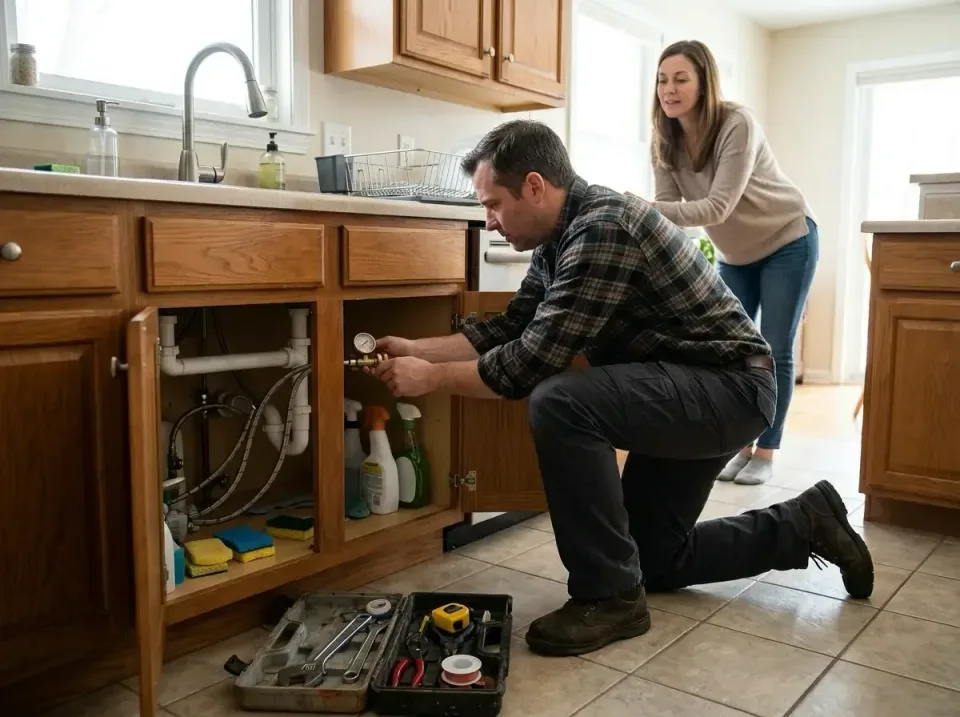
At the White County Courthouse, the mix of older downtown storefronts and homes nearby reminds us that pressure problems need a property-specific diagnosis. Cleveland’s humid mountain climate can increase plumbing demand during warm spells, while cool winters with occasional snow make exposed or unheated piping worth inspecting when pressure changes.
We schedule service for Cleveland residents and property owners, then check the affected fixtures and accessible supply components. For homes near Cleveland City Hall, our team can explain whether the evidence points to a restriction, leak, or pressure-control issue. Call (877) 773-0781 to arrange service.
A shower that weakens when another faucet runs can point to limited flow or a restriction; on a mountain home on a sloped lot, pipe routing and elevation can affect readings. Turn off other fixtures and see whether the shower recovers.
If upstairs faucets barely flow, our team compares pressure at several fixtures and checks accessible piping before recommending a repair. Seasonal rainfall can affect groundwater and well performance, so note whether the issue began after a change in weather or well use. Do not adjust pump controls yourself; check whether other taps are affected and share that with us.
We also investigate whole-house drops and weak hot-side flow, including pressure loss after a meter change. Cleveland’s freeze-thaw cycles can stress exposed plumbing, and summer thunderstorms can briefly interrupt power to pump equipment.
Our crew checks the system condition and explains the likely cause. We serve ZIP code 30528; call when the pressure remains low or changes across multiple fixtures.
Yes weather can change access and system conditions, but a pressure test helps separate those effects from a plumbing fault. Cleveland’s humid mountain climate means high indoor humidity can leave condensation on cool pipes; wipe a suspected pipe dry and watch whether moisture returns before treating it as a leak.
Near BabyLand General Hospital, frequent thunderstorms can bring brief power outages that interrupt pump operation in properties relying on powered equipment. Check whether the outage coincided with the pressure change, but leave electrical and pump controls untouched.
Cleveland is inland, so coastal storm-surge exposure is not the local concern; tropical systems can still bring disruptive weather and outages. If pressure remains low after power returns, we can inspect the accessible supply and explain the next repair step.
Cleveland plumbing repairs must be assessed under applicable state and local requirements, not assumed to follow Atlanta’s permitting process. Skipping a required inspection can leave a repair undocumented or out of compliance.
The International Plumbing Code includes requirements for pressure-reducing valves, which matter when a repair changes pressure-control equipment. Title 12, Chapter 5, also makes drinking-water protection relevant when work affects potable plumbing.
Our licensed team explains the scope and verifies post-repair pressure at multiple fixtures, including at properties near White County High School. A cost estimate should reflect the actual repair scope and site conditions; a generic estimator cannot confirm what your system needs.
Get a clear diagnosis and a repair plan shaped around your home’s water system.
Georgia Plumbing Pros brings experience with older homes and changing water systems. Technicians test pressure, check multiple fixtures, and confirm whether your home uses municipal or well water before discussing possible causes.
After testing, the technician explains the findings and reviews repair options with you before work begins. You can understand the proposed scope and decide how to proceed without surprises about what the repair involves.
The team coordinates appointments across Georgia and confirms your symptoms and service location before dispatch. That early communication helps the technician arrive prepared to assess the pressure concern at your Cleveland home.
The crew checks the water system, explains the findings, and verifies pressure after the repair.
Confirm the Visit
The team asks about the pressure symptoms and confirms your Cleveland service location before dispatch. You know what concern the technician is coming to assess and can share any useful access details.
Test the System
The technician records pressure at rest and while water is flowing, checks multiple fixtures, and confirms whether the home uses municipal or well water. These checks help narrow the source of the problem.
Repair and Verify
After the agreed work, the technician checks pressure at multiple fixtures to confirm the system’s response. You receive a practical explanation of the work completed and any relevant findings.
Sputtering water at a faucet can be an early sign that flow is not steady. Notice whether it happens at one fixture or several, and share that detail with a plumber; the pattern can help guide the inspection.
A gradual change in flow at a fixture is worth noticing, even if water still comes out. Keep track of where it happens and whether the change persists, so a technician can compare the affected fixture with others.
Frequent rain and thunderstorms can make it useful to check for changes in a home’s water system. If pressure seems different at several fixtures, a technician can test the system and help identify whether the concern is house-wide.
Humid mountain weather and heavier household water use can make weak flow more noticeable during everyday routines. A pressure assessment can distinguish a fixture concern from an issue affecting the wider plumbing system.
Changing weather is a practical reminder to pay attention to water flow before colder conditions arrive. If faucets begin behaving differently, pressure testing can help clarify the cause and the repair options.
Cool weather and occasional snow make reliable indoor water flow important for daily tasks. If pressure changes, an on-site assessment can check multiple fixtures and help determine whether the source is in the home’s plumbing or water supply.
Permit requirements can depend on the repair and local rules. Ask the provider to explain whether permits apply to the planned scope and who will handle them, so you understand what is required before work begins.
A clear scheduling process helps you plan for the visit and know what to expect. Ask how the provider confirms the appointment, service location, and any changes to timing before a technician is dispatched.
The scope may include pressure testing, fixture checks, diagnosis, and a repair, depending on the findings. Ask what is included and what would be considered additional work before you approve the plan.
Understanding the written terms helps you know the agreed scope, any exclusions, and how changes are handled. Ask to review the applicable terms before approving work, especially if the diagnosis points to additional repairs.
Request a quote online or contact our Cleveland, GA team directly by phone or email.
The shared supply may have limited flow or a restriction. In Cleveland, our team tests pressure at multiple fixtures and checks accessible piping; you can first turn off other taps and see whether the shower recovers.
Check whether all faucets are affected and whether the change followed a power outage or meter work. Avoid adjusting pump controls; our crew can test the system and explain the repair options.
Heavy rainfall can saturate soil around buried lines, making outside conditions relevant when pressure changes. Note when the symptom began and whether multiple fixtures are weak; our team can inspect for a line problem.
Low Water Pressure Repair is also available in these nearby communities across Georgia.