Well Pump Repair in Port Wentworth, GA
Well pump repairs for Port Wentworth, GA homes include pump-depth and failed-component diagnosis; typical repairs run $300–$1,500, driven by pump depth and parts.
Heavy rain can saturate soil around buried water lines in Port Wentworth, so a sudden pressure change may call for a line inspection rather than an adjustment inside the home. Our crew checks the system before recommending work.
At the Port Wentworth Public Library, residents can see how close daily life is to the Savannah River; nearby, hot weather can increase outdoor water use and add demand when household fixtures are running. A practical check matters.
We measure pressure, inspect accessible plumbing, and explain what we find before work begins. You get clear options, not a guess.
Call (877) 773-0781 to arrange a Port Wentworth visit. We can route the appointment from our Port Wentworth, GA dispatch team and confirm access details before our crew arrives.
Well pump repairs for Port Wentworth, GA homes include pump-depth and failed-component diagnosis; typical repairs run $300–$1,500, driven by pump depth and parts.
We install residential booster pumps sized to household demand, including pump capacity and electrical work; typical installation runs $800–$2,500.
We repair or replace home pressure regulators, including accessible valve assemblies; typical repairs run $250–$600 depending on valve condition and parts.
Low cold-water pressure service for homeowners includes checking cold-side valves and accessible piping. Typical repair costs depend on parts, pipe condition, and access.
Water Pressure Testing compares gauge readings and fixture flow for Port Wentworth, GA homeowners; a typical test is $75–$200, depending on access and fixture count.
We trace sudden home pressure loss, including meter and buried-line issues; access and excavation needs shape the repair scope and cost.
Whole-house pressure diagnosis for homeowners includes checking the main supply and accessible piping; repair scope and access shape the cost, with final quotes based on site conditions.
We diagnose weak showers for homeowners, including showerhead and supply-side restrictions; typical repairs run $150–$500, depending on access and parts.
We repair leaking residential water lines, including buried sections; typical jobs run $300–$2,000, depending on leak location and excavation access.
Clogged water line repair clears or corrects restricted residential piping, with the work scope and access affecting a typical $300–$1,500 job.
We diagnose weak kitchen and bathroom faucets, including accessible fixture connections. Typical repair runs $100–$350, depending on faucet condition and access.
We trace fluctuating home pressure through fixture and system checks; repair scope depends on the cause, access, and parts required.
We trace weak flow between the municipal meter and home, checking accessible service-line connections; saturated soil after rain can complicate access near Macon's Ocmulgee Mounds National Historical Park, and storm d...
Low hot-water pressure service for Port Wentworth, GA homes includes tracing restricted hot-side flow and checking accessible fixtures; typical repairs run $150–$600, depending on access and parts.
Well pressure tank repair for Port Wentworth, GA homes includes tank and connection work; final cost depends on tank size, parts, access, and site conditions.
We repair residential booster pumps, checking controls, pressure switches, and accessible connections; repair scope and parts determine the final cost.
We repair residential softener valves, bypasses, and resin-bed restrictions; typical jobs may run $150–$600 depending on parts and access.
Tankless water pressure repair checks restricted heater passages and connections; the quote depends on access, parts, and the condition of the unit.
Water Filter Pressure Repair clears restricted cartridges and housings for Port Wentworth, GA homes; typical repairs run $150–$500, depending on filter type and access.
Upper-floor pressure diagnosis for Port Wentworth, GA homes includes comparing flow at fixtures on different levels; access and the cause determine the repair scope and price.
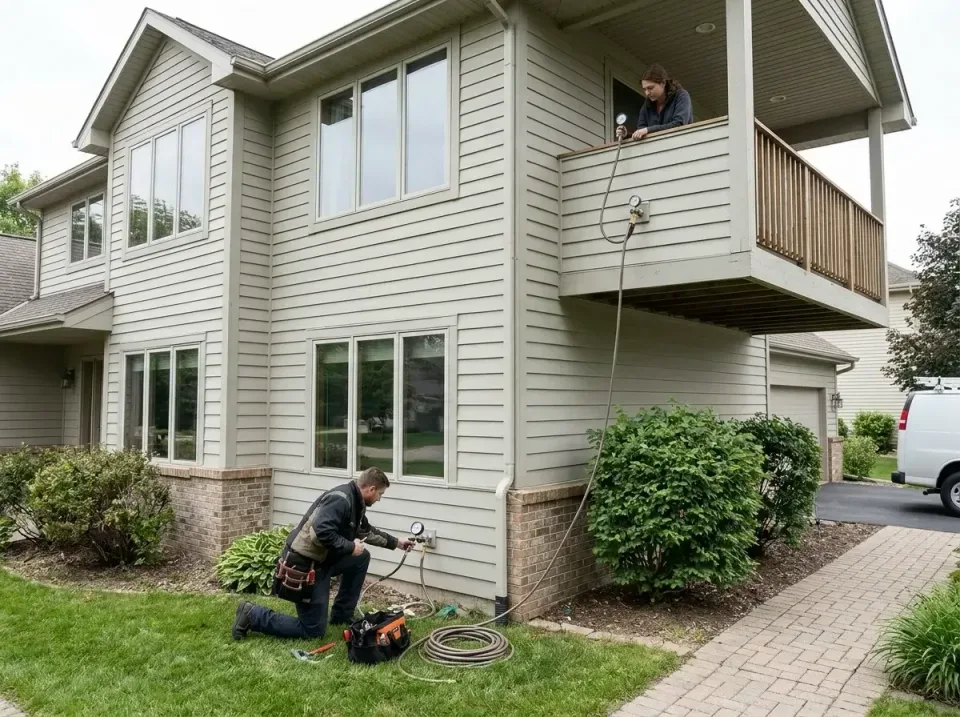
At Port Wentworth City Hall and the Savannah River, local landmarks sit within a community where tropical systems can bring coastal flooding and outages. Storm debris may also slow utility access, so our team confirms routes and appointment details before setting a visit for a pressure problem.
Seasonal rainfall can affect groundwater and well performance; customers on private wells should note whether flow changes after wet or dry periods, so we can compare those observations with system readings. Drought can strain private wells, making a persistent weak flow worth checking at the pump and tank rather than treating as a fixture-only issue.
Our licensed crew explains findings, confirms the work scope, and coordinates scheduling from Georgia dispatch. You’ll know what we plan to inspect.
When the shower weakens as another faucet runs, the competing demand is a useful clue. In Port Wentworth, raised crawlspace foundations can leave portions of the supply line accessible for inspection; our crew checks pressure at more than one fixture and looks for restrictions or leaks. You can safely note whether the drop happens only when another tap is open.
A sudden whole-house drop needs a different check. Our team compares the pressure at the home’s supply and fixtures, then inspects accessible valves and piping; frequent summer thunderstorms can briefly interrupt power to equipment that depends on it. Check whether neighboring fixtures are also affected, without opening electrical equipment.
Hot water weakens while cold remains steady? We trace the hot-side path and inspect accessible connections. Typical service coverage includes ZIP code 31407.
Hot, humid summers increase plumbing-system demand in Port Wentworth, especially when outdoor watering overlaps with showers and household use. Our team checks whether the pressure loss appears across several fixtures or at one outlet before identifying a repair path.
Frequent summer thunderstorms can cause brief power outages, which may interrupt powered water equipment and leave customers noticing weak flow afterward. At Port Wentworth Community Center, the local weather is no abstract concern; if pressure changes after an outage, note which fixtures are affected and whether power has returned before our crew tests the system.
Inland areas generally avoid direct storm surge, but that does not prevent household pressure trouble. Pipes in unheated spaces can freeze during cold snaps; even in Port Wentworth, check exposed plumbing during an unusual cold spell and tell us if flow changed. We can inspect safely and explain the next step.
Our team schedules Low Water Pressure Repair visits across O’leary, Meinhard, and Port Wentworth Junction. In O’leary, we ask whether weak flow affects one fixture or several so the visit can focus on the right part of the supply system.
For Meinhard customers, a faucet that runs weakly while other taps work normally is useful diagnostic information; our crew can compare fixtures and inspect accessible connections. At Port Wentworth Junction, we confirm access and the affected rooms before dispatch, which helps us plan pressure checks without unnecessary disruption.
Water softener restrictions can reduce flow through fixtures, so note whether pressure changed after service or a setting adjustment. Low cold-water flow may point to a different section than weak hot-water delivery; tell us which side is affected. If one faucet alone is weak, check that its handle is fully open, then arrange an inspection if the problem persists.
Get a clear explanation of the pressure problem and repair options before work begins.
Georgia Plumbing Pros confirms your symptoms and Port Wentworth service location before dispatch. On site, the technician explains what testing shows and reviews repair options with you before starting work.
You hear what the technician found and which repair options fit before work begins. That gives you a chance to ask questions and agree on the scope instead of facing unexplained work.
Ten years in business across Georgia has taught the team to look for causes such as regulators, leaks, well systems, or problems farther down the line not guess from one weak faucet.
The team checks the water source and pressure, explains its findings, and verifies the repair at multiple fixtures.
Confirm Symptoms
The team confirms what you have noticed and the Port Wentworth service location before dispatch. This gives the technician useful context and helps prepare for the visit.
Test Pressure
On site, the technician records static and flowing pressure, checks multiple fixtures, and confirms whether water comes from a municipal supply or a well. You get findings based on the system.
Verify The Repair
After the agreed repair, the technician checks pressure at multiple fixtures. You can see whether water flow has improved across the tested parts of the home.
A toilet tank that takes longer than usual to refill can signal a change in the water supply to that fixture. Notice whether nearby fixtures behave differently, and keep track of when the change began.
An appliance that seems to fill more slowly than usual can be an early clue that water delivery has changed. Note whether other household water use is normal, so the technician has useful context if the change continues.
Spring rain and tropical weather can bring changing conditions around water systems. If pressure changes, arranging a check can help distinguish a household plumbing issue from a supply concern. Share when you first noticed the change and which fixtures are affected.
Hot, humid weather and tropical storm risk make it useful to keep an eye on water pressure and household plumbing. If flow changes, schedule an assessment to identify whether the cause is inside the home or farther along the supply.
Tropical systems can affect local water conditions in fall, making unexpected pressure changes worth checking. Arrange service when flow becomes inconsistent, and tell the technician whether the change followed a disruption or appeared gradually.
Winter is a practical time to address pressure concerns before they interfere with everyday water use. If flow has changed, a technician can test the system and explain possible causes, including a regulator, leak, well system, or issue farther down the line.
Request a quote online or contact our Port Wentworth, GA team directly by phone or email.
Check whether several fixtures are affected and whether the change followed a power outage or work on the water supply. Avoid adjusting unfamiliar valves. Our crew can test the system and identify whether the issue is limited to a fixture or affects the home’s supply.
Two fixtures running together can reveal a flow restriction or a supply that cannot meet simultaneous demand. Note which taps are running and whether the problem affects hot, cold, or both. We compare pressure at multiple fixtures before recommending a repair.
Yes. A restriction through the softener or its connections can reduce flow. If pressure changed after a setting adjustment or service, mention that when scheduling; do not bypass equipment unless its instructions say it is safe.
We ask which fixtures are affected, take pressure readings, and inspect accessible parts of the supply system. For customers in O’leary or Meinhard, noting whether hot and cold flow differ can help our team narrow down where to test.
Low Water Pressure Repair is also available in these nearby communities across Georgia.